 Palisades

Until recently, many surgeons considered Roux-en-Y gastric bypass the gold standard in weight loss surgery. The bypass combines restriction (making the useful size of the stomach smaller) and malabsorption (reducing the absorption of nutrients through the small intestine) to offer exceptional weight loss potential, along with the significant improvement or elimination of many diseases associated with morbid obesity. The gastric bypass is performed minimally invasively, and in Dr. Morin’s hands, robotically, meaning several small incisions are made in the abdomen through which specially designed robotic instruments are inserted.

Gastric Bypass Surgery
How It Works
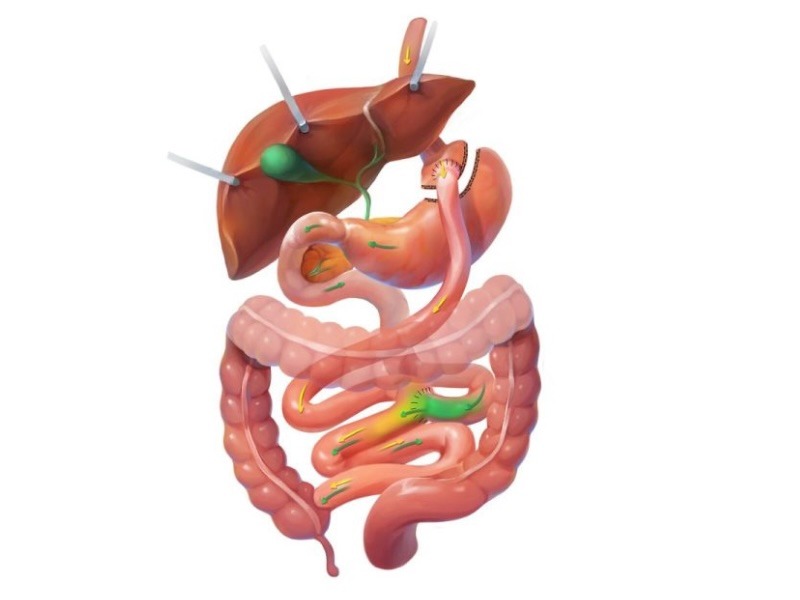
First, Dr. Morin will separate approximately 80% of the existing stomach, leaving a small gastric pouch about the size and shape of your fist. A specially designed instrument divides the tissue and creates staple lines on either side, thereby completely sealing the stomach’s contents with three rows of staples. This is the restrictive phase of the procedure, which limits the amount of food the patient can eat at each meal.
The second part of the procedure involves bypassing a significant portion of the small intestine. The result is that fewer nutrients are absorbed through the intestinal walls due to the reduced usable surface area.
No part of the stomach or intestine is removed in this procedure.
Results of the Gastric Bypass
Results of the gastric bypass vary between patients. Patients generally lose significant excess weight (60-80%) and have excellent comorbidity resolution and improvement rates. The gastric bypass offers excellent excess weight loss potential. As with any weight loss procedure, gastric bypass is simply a tool for patients to change their lifestyle through improved diet and exercise. Without proper aftercare, the gastric bypass will not succeed.
Benefits
- Rapid initial weight loss.
- Significant potential for long-term excess weight loss
- Excellent obesity-related disease resolution or improvement rates, especially for type 2 diabetes and chronic acid reflux (GERD)
- No permanently implanted medical device
- No part of the stomach is removed
- In Dr. Morin’s hands, the bypass can be reversed using a highly technical procedure
Considerations
- Significant dietary restrictions and the potential for nutritional deficiencies. Patients will need to take life-long nutritional supplements.
- The possibility of dumping syndrome, a non-life-threatening condition in which food passes through the stomach and into the intestine too quickly. This can often be avoided by minimizing the consumption of high-fat and high-sugar foods.
- Potential for the staple line to leak, requiring emergency attention.
- The gastric bypass is a major surgery with inherent risks, which will be discussed during consultation.
Gastric bypass patients are prone to a non-life-threatening condition known as dumping syndrome. This occurs when high-fat or high-sugar foods are introduced into the diet. Also known as rapid gastric emptying, dumping syndrome is very uncomfortable. For some, it would be considered a distinct disadvantage of gastric bypass. However, we see it as direct feedback that guides the patient on what should and should not be eaten after a bypass.
If you would like more information on the gastric bypass, we encourage you to schedule a consultation with Dr. Morin. At this consultation, you will learn more about the benefits and risks of gastric bypass and whether you may be a candidate for bariatric surgery.