 Palisades

The gastric sleeve, also known as sleeve gastrectomy, is popular among patients and surgeons because it offers a relatively straightforward approach to weight loss. On its face, it is a restrictive procedure that limits the amount of food a patient may eat in a single sitting. However, because of the removal of the fundus of the stomach, it is so much more…a hormonal therapy as well. It was once only performed as the first part of a two-stage procedure – the duodenal switch. Over time, surgeons recognized that the gastric sleeve was a highly effective procedure in its own right. It has been performed as a stand-alone operation ever since.

Gastric Sleeve / Sleeve Gastrectomy
How The Sleeve Works
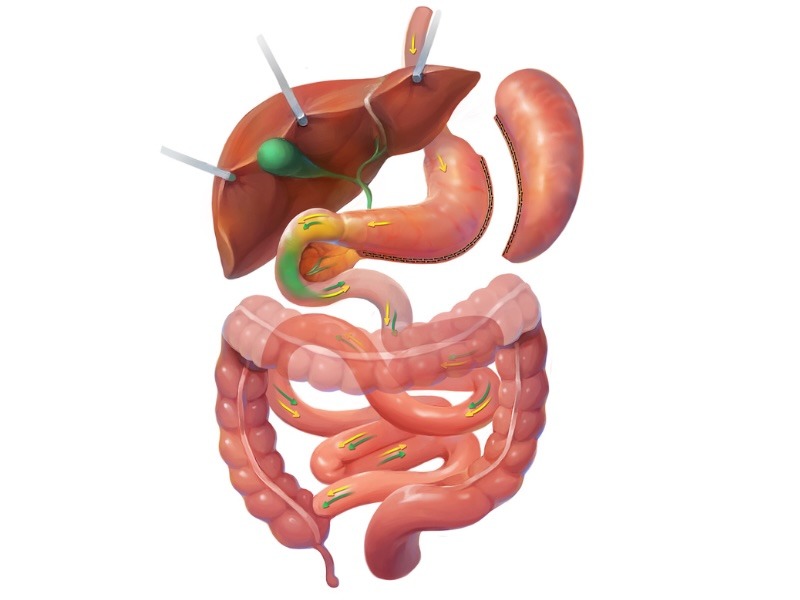
Dr. Morin cuts away and removes approximately 75-80% of the existing stomach during surgery. What is left is a much-reduced gastric chamber about the size and shape of a banana. This sleeve-shaped pouch – hence the name – holds much less food, limiting the patient’s food consumption at any given meal. Besides excising a portion of the stomach, the small intestine remains intact in form and function.
The procedure is performed in a minimally invasive manner under general anesthesia. Due to the laparoscopic nature of the procedure, recovery is relatively straightforward, with less risk of blood loss, pain, and incisional hernia when compared to an open procedure. Most patients will spend one night in the hospital unless their general health status requires a longer observation period.
Not Just Restriction
When the outer portion of the stomach is removed, so too is the fundus, which produces much of the hunger hormone ghrelin. As a result, many patients report feeling less hungry in the first year or two after surgery. Furthermore, the valve between the stomach and duodenum (the pylorus) remains intact, unlike after a gastric bypass. It is worth noting that the hunger-reducing effects of the surgery may diminish over the years as the small intestine adapts to produce ghrelin.
Gastric Sleeve Expectations
The average patient will lose a significant amount of weight (approximately 60-70% excess weight loss) and improve or resolve many diseases associated with morbid obesity. The gastric sleeve generally offers somewhat lower weight-loss potential than the gastric bypass and duodenal switch/SADI, and greater weight-loss potential than a gastric band (Lap-Band). Individual results will vary, and not all patients will be suitable candidates for the gastric sleeve procedure.
Beyond weight loss results, patients will experience a significant improvement in many diseases associated with morbid obesity. However, a gastric sleeve may not be the best option for patients with poorly controlled or uncontrolled type-2 diabetes or those who have significant acid reflux (GERD).
It is also important to note that the patient’s focus and dedication to improved health through diet and exercise are critical to the procedure’s success. The gastric sleeve is only a tool to help patients improve their lifestyle habits. If patients do not adhere to their postoperative plan, they may not achieve their desired outcomes.
Advantages
- Significant weight loss and disease improvement results
- Fewer dietary restrictions when compared to the gastric bypass
- Lower risk of nutritional deficiencies versus gastric bypass, DS, and SADI
- No rerouting of the small intestine
- No permanently implanted medical device
- Most patients experience reduced hunger after surgery.
Considerations
- Lower potential for total weight loss than other stapled procedures.
- It cannot be adjusted (except by a conversion bariatric surgery) and cannot be reversed.
- A minimal risk of staple line leakage requiring emergency attention.
- Major surgery that comes with inherent risks
- While an advantage from a patient comfort standpoint, gastric sleeve patients typically do not experience dumping syndrome, a self-limiting condition in which patients receive gastrointestinal feedback from eating high-fat or high-sugar foods after a bypass. While dumping syndrome is not desirable, it does help the patient modify their diet.
If you wish to receive more information on the gastric sleeve, we encourage you to schedule a consultation with Dr. Morin. At this consultation, you will learn more about the benefits and risks of the gastric sleeve and whether you may be a candidate for bariatric surgery.